




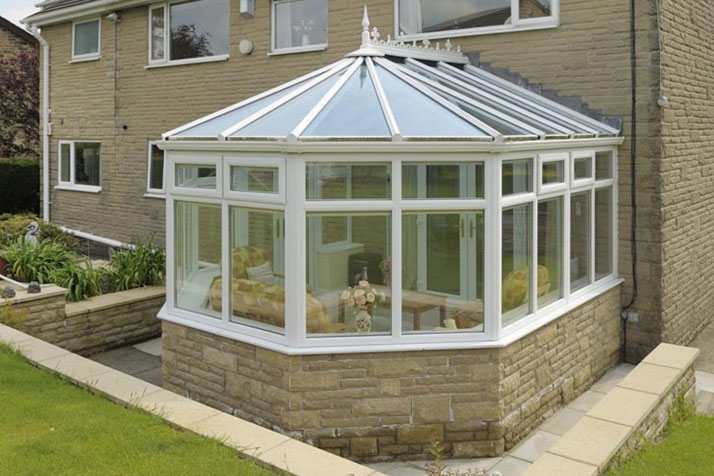
If your conservatory feels like a greenhouse in summer and a fridge in winter, you’re certainly not alone. It’s one of the most common complaints about older conservatories.
The problem isn’t necessarily the conservatory itself. In many cases, it’s down to older glazing, an inefficient roof, poor insulation or a combination of all three.
So, why is your conservatory too hot in summer and freezing in winter? And, more importantly, can you fix it without replacing the entire conservatory?
In many cases, you can.
Why Does My Conservatory Get So Hot in Summer?
Traditional conservatories contain large areas of glass, allowing plenty of natural light into the room.
Unfortunately, sunlight also carries heat.
As solar energy passes through the glazing, surfaces inside the conservatory absorb that energy and the temperature begins to rise. With nowhere for the heat to escape quickly enough, the conservatory can become uncomfortably hot.
Older glass and polycarbonate roofs can make this particularly noticeable.
The direction your conservatory faces also matters. South- and west-facing conservatories can receive strong sunlight for significant periods of the day, making solar heat gain an even bigger consideration.
Why Is My Conservatory So Cold in Winter?
During winter, the problem effectively reverses.
Instead of unwanted heat entering the conservatory, the warmth inside can escape through poorly performing glazing, frames and the roof.
Older conservatories were often designed primarily to provide a bright additional space rather than the level of thermal performance homeowners now expect from an everyday living area.
As a result, you can turn the heating on and feel warm temporarily, only for the temperature to fall again surprisingly quickly.
The Roof Could Be a Major Part of the Problem
If your conservatory has an older polycarbonate or basic glass roof, it may be contributing significantly to both problems.
During summer, solar energy can enter through the roof and cause the room to overheat.
During winter, heat generated inside the conservatory can escape through the same area.
This is why simply adding a bigger heater doesn’t necessarily solve a cold conservatory. You’re producing more heat without addressing how quickly that heat is being lost.
Likewise, adding fans during summer might make the room feel temporarily more comfortable without addressing why so much heat is entering in the first place.
Could the Glazing Be Making My Conservatory Uncomfortable?
Yes. The age and specification of the glazing can have a significant impact on the temperature of a conservatory.
Modern energy-efficient conservatory glass performs very differently from some older glazing.
Solar-control glass can help reduce the amount of unwanted solar heat entering during summer while modern energy-efficient glazing can also help retain warmth during colder weather.
This can make the temperature inside the conservatory considerably easier to manage throughout the year.
What About Draughts?
Not every cold conservatory needs a new roof.
Before considering larger improvements, it’s worth checking the condition of the existing windows, doors and seals.
Damaged seals, poorly fitting doors and gaps around frames can allow cold air into the conservatory and warm air out.
If the roof and glazing are otherwise performing well, dealing with draughts could make a noticeable difference.
However, if your conservatory is consistently extremely hot in summer and extremely cold in winter, there may be a wider thermal performance issue.
Would a Modern Glass Roof Make a Difference?
If you love the traditional appearance of a bright, glazed conservatory, replacing an older roof with modern high-performance glass may be an option.
Modern conservatory roof glass can incorporate solar-control technology designed to reduce unwanted heat from the sun.
At the same time, improved thermal performance can help reduce heat loss during colder weather.
This allows you to retain the light and open feeling of a glazed conservatory while improving year-round comfort.
Would a Solid Conservatory Roof Be Better?
For some homeowners, replacing an inefficient conservatory roof with an insulated solid roof can provide a more significant transformation.
A solid conservatory roof can dramatically reduce the amount of direct solar heat entering from above while providing much better insulation during winter.
It can also change the character of the conservatory, making it feel more like an extension and a natural part of the house.
This can be particularly appealing if you want to use the room as an everyday living space, dining room, home office or family room.
Will a Solid Roof Make My Conservatory Too Dark?
This is a common concern, but choosing a solid roof doesn’t necessarily mean losing all the natural light.
Skylights or rooflights can be incorporated into many solid conservatory roof designs.
This gives you the thermal benefits of an insulated roof while still allowing daylight to enter from above.
It can also help maintain natural light in the room adjoining the conservatory.
For many homeowners, a solid roof with carefully positioned rooflights offers an excellent compromise between insulation and natural light.
Do I Need to Replace My Whole Conservatory?
Not necessarily.
If the frames and main structure of your existing conservatory remain in good condition, replacing the roof or upgrading the glazing may be enough to dramatically improve its performance.
This is why it’s worth having the conservatory assessed rather than assuming the whole structure needs replacing.
In some cases, however, an older conservatory may have reached the point where replacing several individual components no longer represents the best value.
A new conservatory allows modern energy-efficient glazing, ventilation and roof options to be considered together from the beginning.
Can I Make My Existing Conservatory More Energy Efficient?
There are several ways to improve an existing conservatory.
Simple measures such as addressing draughts, improving ventilation and using appropriate blinds can help with comfort.
If you’re ordering a new conservatory from Elmhurst Windows, blinds can also be supplied as part of your conservatory order. Elmhurst does not currently provide a standalone blind supply and fitting service.
For a conservatory with significant temperature problems, however, improvements to the glazing and roof are likely to have a greater impact.
The right solution depends on the age, construction and condition of your existing conservatory.
Glass Roof or Solid Roof: Which Should I Choose?
It largely comes down to how you want to use the room.
If maintaining maximum natural light and the traditional conservatory appearance is important, a modern solar-control glass roof may be the right option.
If your priority is improved insulation and creating a room that feels more like an extension of your home, a solid insulated roof may be more suitable.
Alternatively, a solid roof incorporating skylights or rooflights can provide a balance between the two.
There isn’t one solution that will be right for every conservatory, which is why looking at the existing structure and how you use the room is important.
Stop Fighting the Temperature
If you’re constantly opening every window in summer and turning the heating up in winter, your conservatory may not be performing as efficiently as it could.
Fans, heaters and blinds can help manage the symptoms, but they don’t necessarily address the underlying cause.
Upgrading older glazing or replacing an inefficient conservatory roof can help create a much more stable and comfortable environment throughout the year.
Elmhurst Windows supplies and installs new conservatories, replacement conservatory roofs and energy-efficient glazing across Leeds and the surrounding areas.
If your conservatory is too hot in summer and freezing in winter, contact Elmhurst Windows to arrange a conversation about your existing conservatory and the options available for making it a more comfortable, usable part of your home.